



Deep Origin awarded $31.7M ARPA-H contract to replace animal testing with in-silico models. Learn more

Leave No Development Candidate Behind

90% of drugs fail in clinical development. Most of that failure happens because preclinical models are poor predictors of what happens in humans. We are building the models that close that gap.

  • 100+ scientists in biology, chemistry & physics
  • $50M + $32M capital raised · ARPA-H contract
  • 2 / 40 partnership slots filled
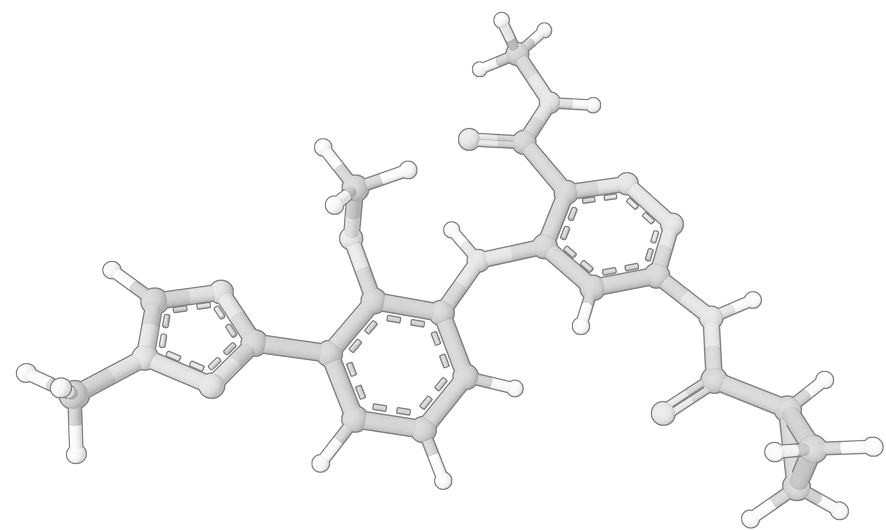
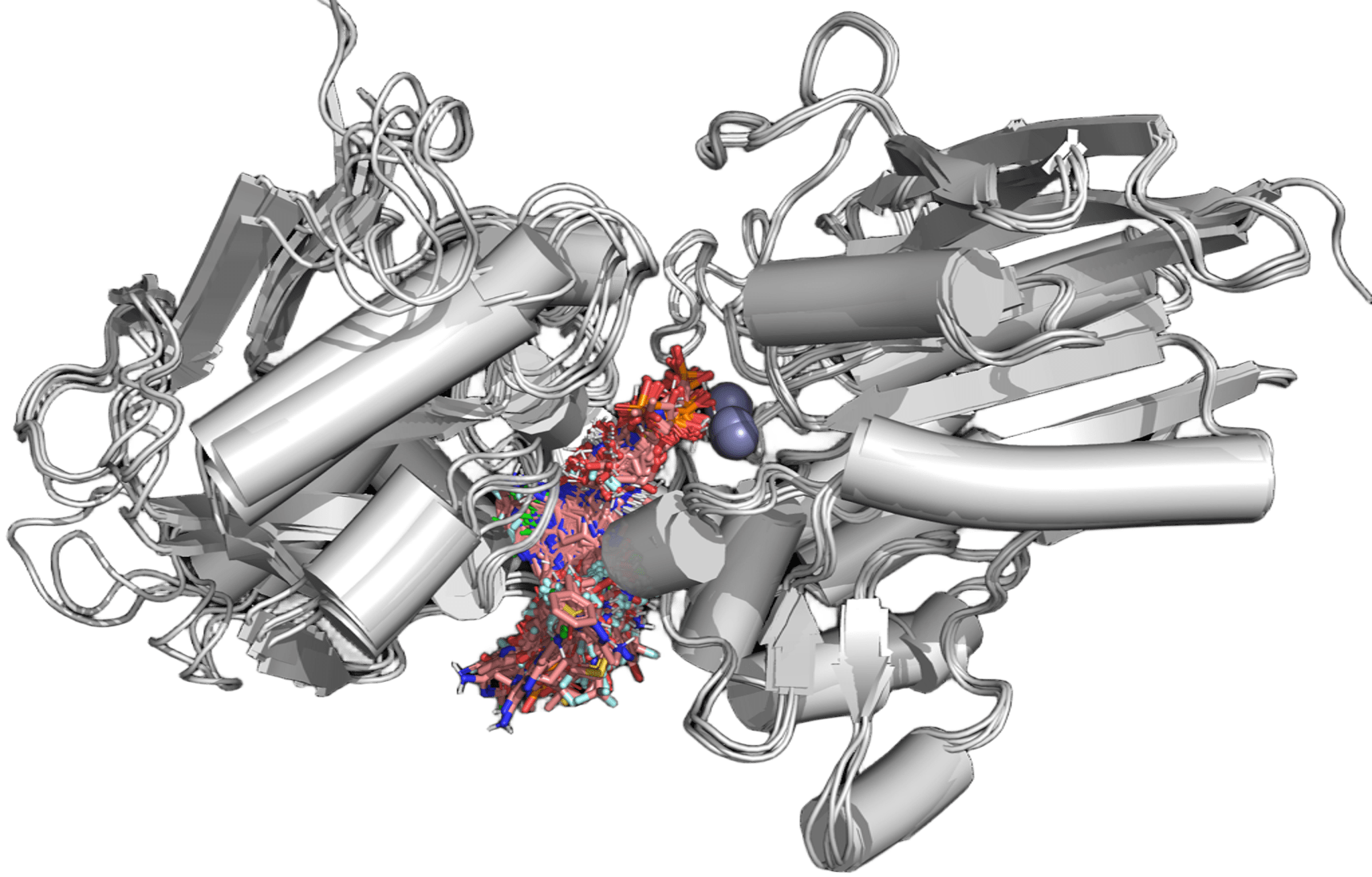
CD73 protein with overlaid docked hit compounds — Deep Origin internal program CD73 program · 159 compounds, 30% hit rate

Our team has built and partnered at

  • Novartis
  • Takeda
  • Astellas
  • Atomwise
  • MIT
  • Palantir
  • Strateos
  • Google
  • Oculus

9 in 10 drugs entering clinical trials never get approved

Decades of time, billions of dollars, countless patients waiting because preclinical models still don’t predict clinical behavior. We build ones that do — applied at the five decisions that change a program’s trajectory.

>100,000
compounds screened
~250
advanced through hit-to-lead
~10–20
enter clinical testing
1
approved drug
Source: Sun et al., Acta Pharm Sin B, 2022. Cost breakdown across the development pipeline.
  • Target ID

    Kill weak targets early

    Efficacy and tox risk flagged before you commit program budget.

  • Hit discovery

    Synthesize the right molecules

    Physics-based filtering before a medicinal chemist touches a flask.

  • Lead optimization

    Pick the candidate that survives

    Multi-parameter ranking instead of a gut call.

  • Program rescue

    Redesign around a tox signal

    Save the program — keep the sunk investment.

  • Trial design

    Enrich the responder population

    Predictive subpopulation selection to lift Phase II PoS.

Why Deep Origin

Three things that don’t exist together anywhere else.

Coverage, novel-target predictivity, and independent benchmarks — most platforms own one. We’re built around all three.

01 Scale + explainability

Scale and explainability no one else combines.

Physics-based docking suites are explainable but stop at Molecular. Phenotypic-imaging platforms reach Cellular — as image correlations, not physics. Generative AI platforms span similar scale to ours but as black boxes. PK/PBPK and trial-simulation tools operate only at Tissue and above. Deep Origin combines Quantum-through-Cellular coverage with explainable physics throughout — and ARPA-H extends the roadmap further.

Learn more about our ARPA-H Program
QuantumMolecularMacromol.CellularTissue+
  • Deep Origin
  • Physics-based docking suite
  • PK/PBPK & trial-simulation tools
  • AI structure prediction platform
  • Phenotypic-imaging platform
  • Generative AI platform

Deep Origin’s coverage extends through Tissue and beyond on the ARPA-H roadmap.
02 Novel targets

We work where other models can’t.

DO Dock retains predictivity on targets with 0–20% Tanimoto similarity to the training set — the space where novel programs live, and where the most valuable partnership conversations happen. Verified on the Runs N’ Poses benchmark.

View our Science
Predictive confidence on novel targets (0–20% Tanimoto similarity)
  • DO Dock 55%
  • Vina 22%
  • AF3 18%
  • Boltz-1 9%
  • Chai 5%
03 Public benchmarks

Top-2 against foundation models on the ADME tasks that drive early triage.

Deep Origin Togo ranks #1 on permeability, lipophilicity, solubility, half-life, hERG, and AMES, and #2 on plasma protein binding and DILI — ahead of Recursion MolE and Google TxGemma on those tasks. Tradeoffs remain on CYP-mediated inhibition; benchmarks are public via Therapeutic Data Commons.

View our Science
TDC rank · selected tasks
  • Permeability #1
  • Lipophilicity #1
  • Solubility #1
  • Half life #1
  • hERG #1
  • AMES #1
  • Plasma protein binding #2
  • DILI #2
What we are not

Unlike legacy platforms that require dedicated IT infrastructure and deep bioinformatics expertise to operate, Deep Origin is accessible to the full discovery team. Medicinal chemists, biologists, and BD leads work from the same discovery infrastructure their computational partners do.

Our vision

The next decade of drug discovery runs on predictive preclinical models.

90% of drugs fail in clinical development. Most of that failure happens because preclinical models are poor predictors of what happens in humans. We’re building the physics-based, AI-accelerated models that close that gap — so fewer programs die in the clinic.

The platform combines molecular physics with AI acceleration. Our team of 100+ scientists across biology, chemistry, and physics work with pharma partners on real programs, not demos.

Founders

Built by people who’ve done this before — and are in it for the long arc.

Michael Antonov

Michael Antonov

Co-Founder & CEO

Co-founded Oculus, sold to Meta for more than $2B. Now personally financing Deep Origin through Formic Ventures — a long-term bet on computational biology from someone who has built frontier technology at scale.

LinkedIn →
Garegin Papoian, Ph.D.

Garegin Papoian, Ph.D.

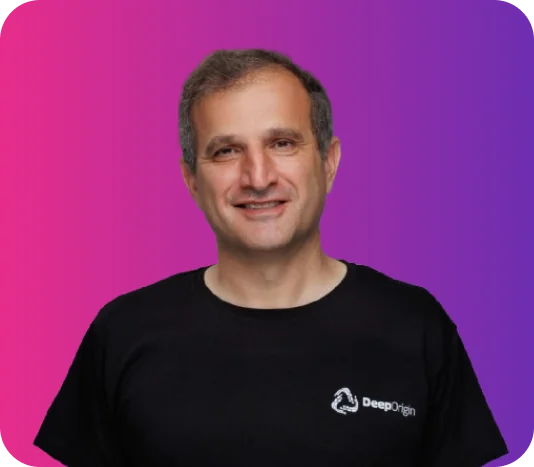
Co-Founder & CSO

Monroe Martin Professor and Director of Chemistry & Biophysics at the University of Maryland. Twenty years of peer-reviewed research in molecular physics underpins the models we apply to pharma programs.

LinkedIn →