New preprint: overcoming the accuracy-generalization tradeoff in docking and scoring for prospective virtual screening. Read the paper

DO Studio · Beta

Better molecules to synthesize, runnable by your whole team.

Focus on the science, we take care of the rest. State-of-the-art docking and free energy that hold their accuracy on novel targets — where most methods fall apart.

Sign up Explore playground below.
os.deeporigin.io/org/aurka-hitid
DO Studio Beta AURKA-HITID
My TeamAURKA-HITID
{{ crumb }} {{ execId }}
DO Studio · Beta

Better molecules to synthesize, runnable by your whole team.

Focus on the science, we take care of the rest. State-of-the-art docking and free energy that hold their accuracy on novel targets — where most methods fall apart.

Sign up Explore playground below.

Applications

Pick one to open it

Target Preparation

Grade a structure, fix it, find its pockets.

Open →

Dock Ligands to Protein

Predict molecular binding interactions.

Open →

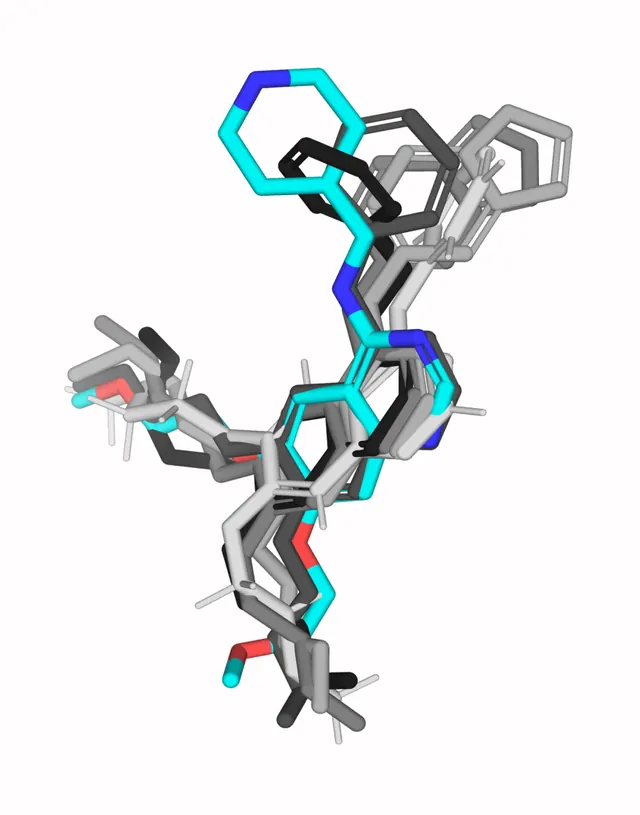
Constrained Docking

Dock a series anchored to a reference pose.

Open →

ABFE (Absolute FEP)

Predict absolute binding free energies.

Open →

ADMET Props

60 ADMET endpoints per ligand, flagged by concern.

Open →

DO Patent

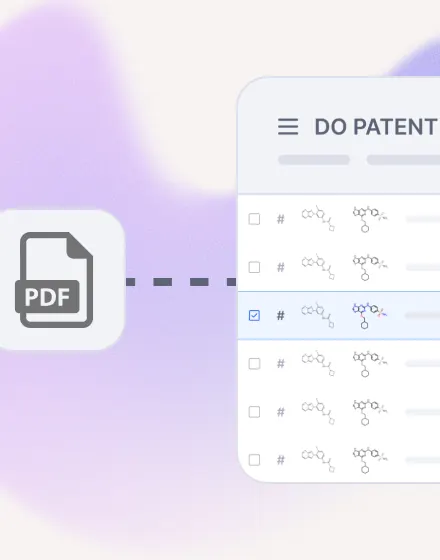
Identify structures in patent PDFs.

Open →
Many more applications in Studio. Free energy, constrained docking, enumeration, similarity search, molecular properties and more. See them all

{{ other.title }}

{{ other.desc }}

This one isn't in the walkthrough. Run it on your own data in Studio, or open one of these:

Sign up to run it
JAK2 JH1 kinase domain prepared and saved to AURKA-HITID.
Proteins Data Columns
ID Protein Name State
{{ r.id }} {{ r.name }} {{ r.state }}
✓ 1 selected1 to 3 of 3
Structure Report
Structure Grade A
X-ray Homo sapiens 1.80Å ✓ Ligand
3KRR · 293 Residues · 99.3% Coverage

Structure Contents

We analyzed this structure and recommended what to keep, exclude or extract. Change anything you disagree with.

Chain A Recommended 293 residues
Crystal Waters3 waters

Removed during preparation. Turn on Retain Waters in ABFE to keep them.

JAK2 JH1 kinase domain
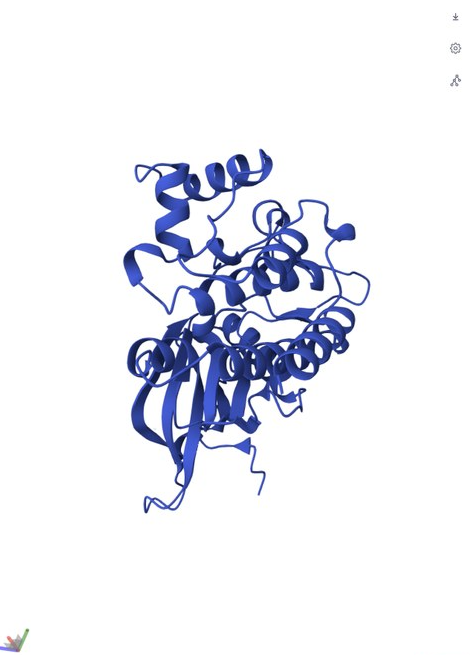
JAK2 JH1 kinase domain ribbon Prepared

Structure Components

Chain A

Preparation Steps

Add missing atoms & residues
Fills incomplete residues
Add missing loops
No missing loops detected
Protonate
Assign states @ pH 7.4

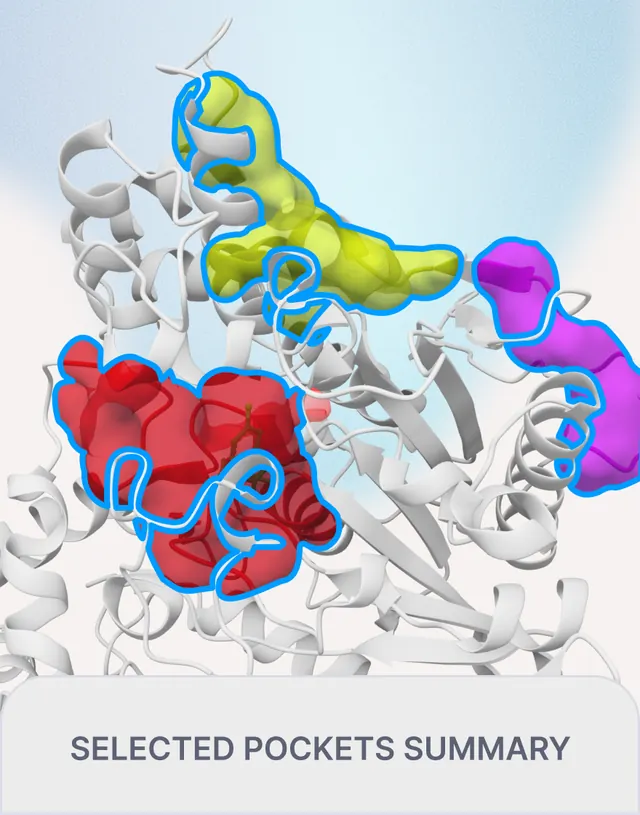
Pocket Finding

5 - Default
JAK2 JH1 kinase domain_TargetPrep
{{ tpStep }}{{ tpPctLabel }}

Dock Ligands to Protein

Draft run

Predict molecular binding interactions.

AURKA PRT-AUR-00001 · 5DNR
Pocket 1 · adjacent to DFG motif 412 ų
Ligands 1,284 ligands
Est. 6 min on 16 GPUs
Structure preview

Dock Ligands to Protein

Running
{{ pctLabel }} {{ dockedLabel }} docked of 1,284
{{ l }} scoring poses…

Dock Ligands to Protein

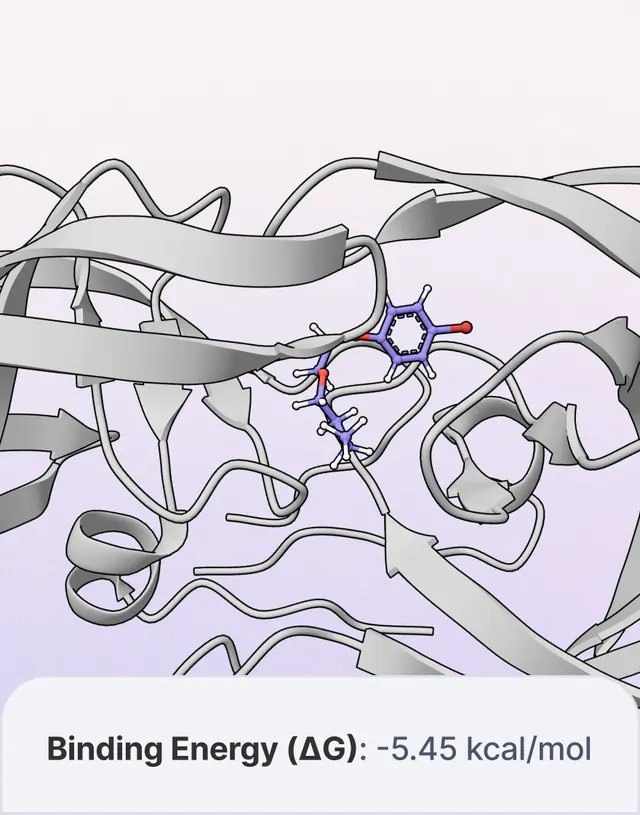
Run completed 1,284 ligands · 6 m 12 s
Queued 20 ligands for ABFE. System preparation runs automatically.
Ranked poses248 above threshold
IDΔG (kcal/mol) RMSD PoseBusters
{{ p.id }} {{ p.dg }} {{ p.rmsd }} {{ p.pb }}
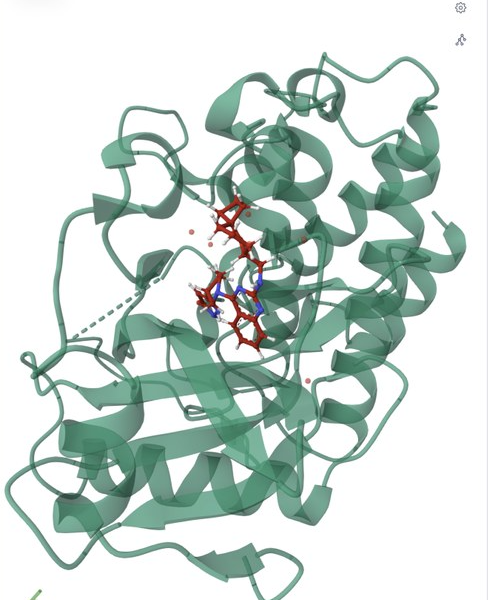
Top pose · LIG-AUR-00412

Next step

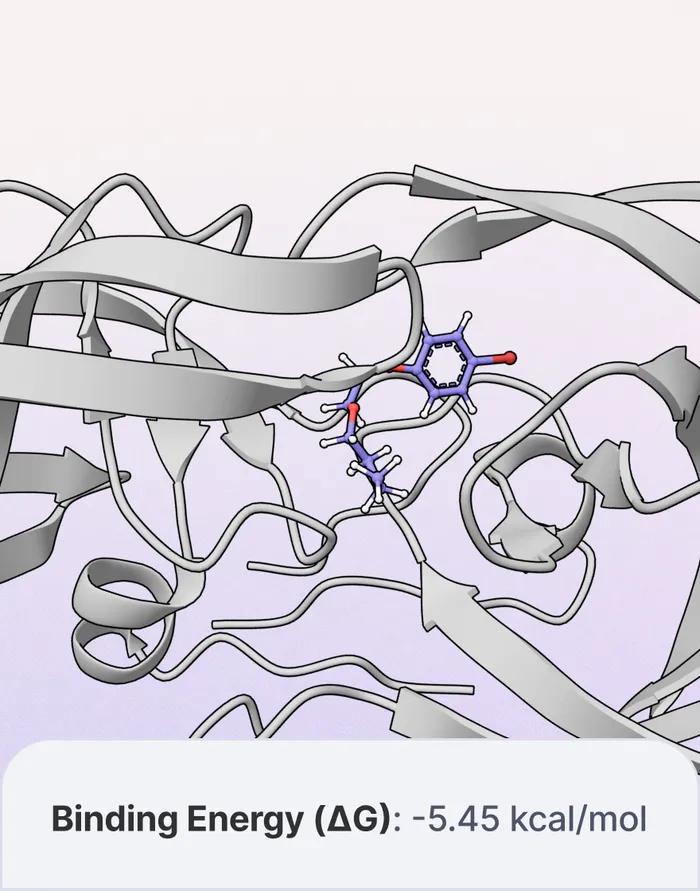
Poses feed straight into absolute binding free energy. Nothing to export, nothing to re-prepare.

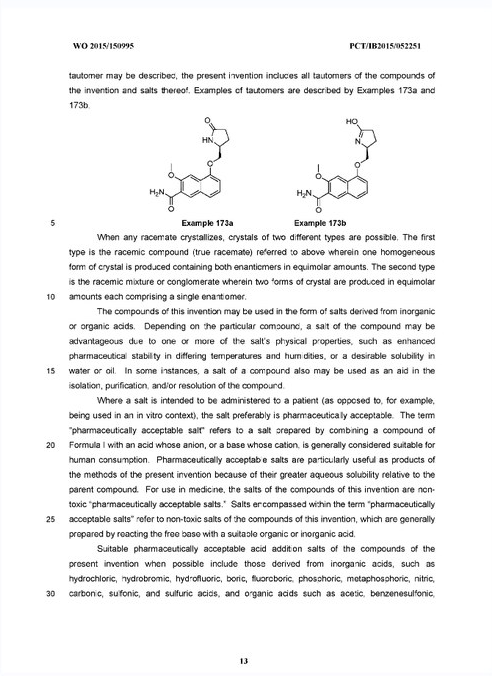
WO2015150995A1
# Original Image SMILES · 2D Confidence Page
{{ r.i }} {{ r.conf }}{{ r.confLabel }} {{ r.page }}
84 structures extractedExport All
Source page {{ patPage }} / 361
Patent page
Queued ADMET Props for 337 ligands.
LigandsColumns
IDSMILES · 2D MWlogP
{{ r.id }} {{ r.mw }}{{ r.logp }}
✓ 337 selected
ADMET Profile
{{ admetId }} Viewing ligand {{ admetPos }} of 337
{{ admetId }} 60 of 60 computed ⓘ 10⚠ 2
{{ r.name }} {{ r.val }} {{ r.label }}

Run Details

LIG-PRO-00001_ADMET
You're about to run with 337 selected ligands.
Proteins
{{ r.name }} {{ r.state }}
Ligands docked to IRAK4
IDSMILES · 2D SAtPSA
{{ r.id }} {{ r.sa }}{{ r.tpsa }}
IRAK4 kinase domain (prepared)
IRAK4 with docked ligand {{ abfeLigId }} Prepared

Inputs

IRAK4 (prepared)_Docking · {{ abfeLigId }}

System Preparation

Adds missing protein atoms, sets protonation for pH 7.4, and solvates the complex. Crystal waters are removed unless Retain Waters is on.

48 - Default
1
1
0.004
Lambda windows{{ abfeWindows }} / 48
ΔG bind · {{ abfeLigId }}
{{ abfeDg }}
kcal/mol · 48 windows · 1 repeat
Proteins
PRT-TES-00002 4E4X (prepared) Prepared
Ligands
IDSMILES · 2DDocking Score
{{ r.id }} {{ r.score }}
Docking ScorePose Score
{{ p.dock }}{{ p.pose }}
4E4X (prepared)
4E4X with ligand poses
Pose ScoreDocking Score LIG-TES-00014 {{ cdPoseScore }}{{ cdDockScore }}
Reference pose · LIG-TES-00001
Balto

Do real science in natural language. Pick a request:

You

{{ baltoQ }}

BaltoOpen artifacts

The main literature-based watch-outs are solubility/oral exposure, CYP-mediated interactions, QT prolongation, and liver toxicity—but none is established for your five compounds. These are screening priorities, not confirmed liabilities of your series.

What published BRAF inhibitors tell us

  • Solubility and absorption: Vemurafenib has very low aqueous solubility and low permeability. This makes solubility/permeability worth checking, but the finding should not be transferred to other BRAF chemotypes. accessdata.fda.gov/drugsatfda_docs/nda/2011/202429Orig1s000ClinPharmR.pdf
  • Metabolism and drug interactions: CYP liabilities recur, but differ substantially. Dabrafenib is metabolized through CYP2C8/CYP3A4 and induces drug-metabolizing enzymes; encorafenib has important interactions with CYP3A4 inhibitors. dailymed.nlm.nih.gov
Searching the web for 'Find series-specific experimental ADME evidence in Ren et al 2012 'The discovery of potent…'
WebResearch · 1m 18s
Run Constrained Docking

Constrained docking of 5 ligand(s) into deeporigin.protein-prep_2026-10-22_03_36_56_prepared anchored to saved Docking or crystal pose for LIG-TES-00001. Studio uses the saved Reference Ligand dropdown pose; the supplied SDF identifies the ligand and pocket, but its coordinates are not submitted.

filled run_name, pocket, effort, constraint_energy, reference · 1 protein(s) selected · 5 ligand(s) selected

Approved · run submitted
Constrained docking of molecule(s) against a reference pose.
ConstrainedDocking · 10m 04s
Message Balto
Research
Balto can make mistakes. Double-check responses.
Balto's tool runs open here, in the same apps you'd use yourself.
ADMET Props ›ADMETEXE-TES-00016
{{ r.id }} {{ r.mw }}
LIG-TES-00002 · Metabolismⓘ 4⚠ 5
{{ r.name }}{{ r.val }} {{ r.label }}
4E4X (prepared){{ baltoCdLabel }}
{{ t.title }}{{ t.meta }}
{{ d.name }} {{ d.type }} {{ d.rows }} {{ d.updated }}

Every application reads and writes here. Molecules are grouped by project.

{{ r.status }} {{ r.app }} {{ r.meta }} {{ r.when }}
From 4 weeks to 4 steps
Sign up today

Interactive mockup of Deep Origin Studio. Data shown is illustrative.

Benchmarks

Easy doesn’t mean limited results.

Public benchmarks, measured the way anyone else would measure them.

DO Dock AF3 Chai Boltz-1 Vina
0 20 40 60 80 100 0–2020–3030–4040–5050–6060–7070–8080–100 Similarity to the training set (binned %) Success rate (%)
Ahead of the next method where chemistry is genuinely new

Runs N’ Poses scores docking as test systems move away from the training set. In the hardest 0–20% band, DO Dock holds 55% while the best co-folding model manages 17% and the rest fall below 10%. That band is where a new program actually starts.

Inside Studio

A whole bench of scientific apps. One interface.

Every method runs on the same shared data, the same managed compute, and the same project view — so a docking pose flows into free energy and a hit set flows into properties without ever leaving Studio.

Dock Ligands to Protein

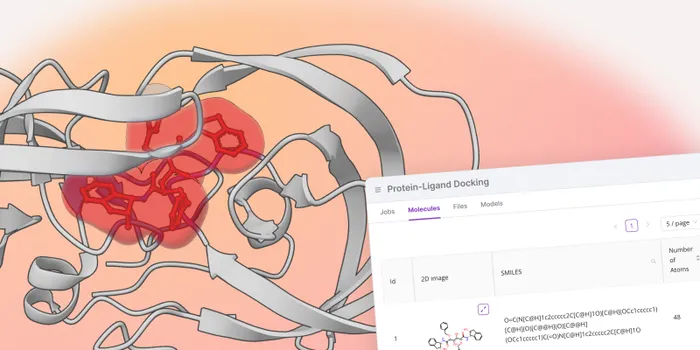
Predict molecular binding interactions — screen ligands against a protein, generate high-quality poses, and calculate predicted interaction energies.

  • HTVS
  • Binding
  • Poses

Constrained Docking

Dock ligands against an already-docked template, constrained by their maximum common substructure, with free-dock fallback when nothing matches.

  • Binding
  • Poses

Pocket Finder

Identify druggable binding sites — detect cryptic pockets, analyse cavity properties, and expand your target space.

  • HTVS
  • Binding
  • Poses

ABFE (Absolute FEP)

Predict binding free energies with rigorous alchemical calculations, for accurate absolute compound ranking.

  • Affinity
  • Binding

Enumeration

Generate compound libraries through smart R-group expansion and scaffold enumeration, for focused chemical space exploration.

  • Enumeration

DO Patent

Identify structures in patent PDFs — extract molecules as SMILES and identify Markush structures.

  • Data
Coming soon

Ligand Similarity Search

Find compounds similar to a query molecule by 2D structural similarity — start from any ligand in your project, or draw your own.

  • HTVS
Coming soon

MolProps

Calculate molecular properties — drug-likeness scores, ADME predictions, and physicochemical descriptors.

  • Properties
Coming soon

Shape Screening

Screen compounds by 3D shape similarity to find bioisosteres and discover scaffold hops.

  • HTVS
Coming soon

QSAR Modeling

Build activity prediction models that correlate structure to potency and prioritise synthesis candidates.

  • HTVS
  • Properties
Coming soon

Pharmacophore Modeling

Map essential binding features — define 3D interaction patterns and guide scaffold design.

  • HTVS

6 apps live today, 5 more coming through beta — each one built to put better molecules on your synthesis list, runnable by anyone on your team.

Before and after

Most molecular modeling software was built for specialists.

It assumes someone comfortable in front of a screen that looks like a jet cockpit. For a team of five to fifty, that assumption is the whole barrier.

Before Waiting on a specialist
With Studio

Your existing scientists, running it themselves

Point-and-click, built for people who are not specialists. The 99% of parameters that should not be touched are hidden by default.

Before A compute cluster to provision
With Studio

Compute that appears when you press run

Nothing to procure, size, or maintain. No queue you have to get to the front of.

Before Weeks of setup and hand-offs
With Studio

Docking straight into free energy

Poses feed into ABFE with no manual curation in between. The chain that used to need reverse-planning is a few one-click steps.

One project. Your whole team.

Computational and bench scientists, same Project, same data.

Studio users and code-first users work side by side in a shared Project. Runs register themselves as they finish, so there is no reconciliation step and nothing gets lost in the gap between two people.

  • Every run tracked automatically — no files to manage
  • Shared across Studio and the API client
  • One source of truth, nothing stitched together by hand
Which one are you?

Our beta is built to unblock small teams.

Research Lead

Assoc. Director, Drug Discovery

Run it yourself — no waiting on specialists.

Unblock the team without adding headcount. Your experimentalists run the analysis, and go/no-go stops depending on somebody else’s calendar.

Enablement · Speed · Spend

CSO / VP Research

Chief Scientific Officer

Better molecules — evidence your approach works.

Proof the method picks real binders rather than credible-looking dead ends, including on targets nobody has solved yet. Nothing obvious left unchecked.

Validation · Focus

Experimentalist

Sr. Scientist · Medicinal Chemist

Know you’re making the right one.

Ask the question the day you have it. Run docking through free energy yourself and get an answer in days, without waiting on an outside lab.

Autonomy · Confidence
Getting started

Start on one target. Grow into the team.

Coming soon

Teams

Shared infrastructure for small biotechs and labs. Everything in Researcher, plus:
  • Up to 6 users on shared projects — same data, same results
  • Compute infrastructure and costs included
  • Pre-pay credits, deducted as you run
  • Higher usage limits and vastly more ligands per project
  • Lower per-tool use prices
Join the Teams waitlist

Enterprise deployments, custom integrations and add-on modules are on the full pricing page.